
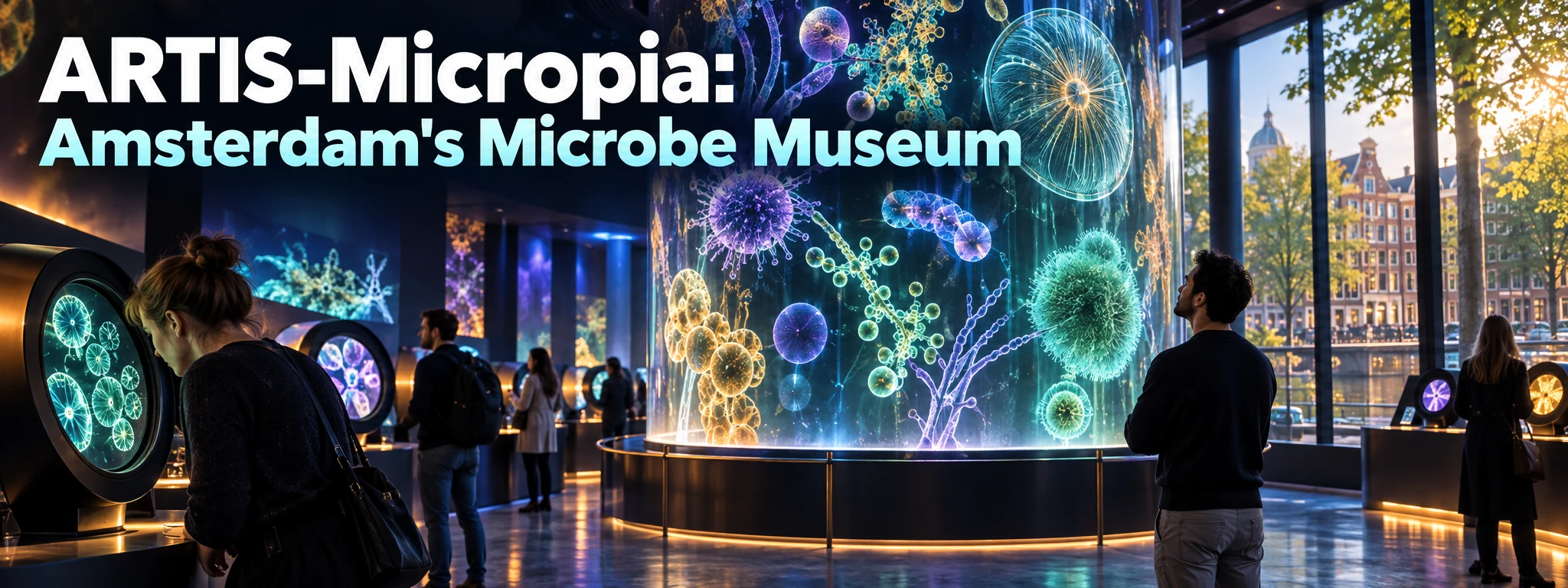
ARTIS-Micropia takes one of the hardest museum subjects imaginable — organisms too small to see with the naked eye — and turns it into a surprisingly physical visit. Microscopes, living cultures, body-related exhibits and interactive displays make microbes feel less like a chapter from school biology and more like an ecosystem you are already carrying around.
It opened in 2014 and is commonly described as the world's first museum dedicated entirely to microorganisms. More importantly for a visitor, it still feels distinctive. Amsterdam has many art museums; it has only one place where a kiss, a petri dish and your own microbiome can become the main event.
Choose Micropia if your group likes science but does not want a giant all-day museum. It is compact enough to combine, but substantial enough not to feel like a side-show.
Current opening hours and ticket prices
ARTIS-Micropia currently opens daily from 10:00 to 17:00. Standard admission for visitors aged 13+ starts from €17 online and is €18 at the counter. Children up to and including age 12 enter free, while the current student rate is €10.50. Museumkaart and ICOM holders are currently admitted free.
ARTIS uses variable online pricing, so the exact amount for your date can change. Booking online is normally cheaper than walking up.
From September, ARTIS also advertises a weekday late-afternoon Micropia ticket from 16:00 for €9. That is an excellent option if you want a short science stop without sacrificing the middle of a sunny Amsterdam day.
Micropia and ARTIS Zoo are separate tickets
Micropia sits within the wider ARTIS organisation and is easy to combine with the zoo, but do not assume a normal zoo ticket automatically includes it. ARTIS sells dedicated Micropia tickets and combination tickets.
Current combination pricing for a 13+ visitor starts around €35.50 online. That can make sense if ARTIS is already a major part of your day; otherwise Micropia works perfectly well as a standalone 60–90 minute visit.
What you actually see
The best displays make invisible life visible in real time. Live microscopes show microorganisms moving, while other exhibits explain bacteria, fungi, viruses and the microbial communities in food, soil and the human body. The famous Kiss-o-Meter turns bacterial transfer into a memorable bit of theatre rather than another number on a wall.
The museum also uses collection activities and changing microbe features to give children something to follow through the building. It is science communication rather than a traditional collection museum, so expect interaction and explanation more than rows of historic objects.
Who gets the most from it?
Micropia is particularly good for curious children, teenagers, biology nerds and adults who like learning something unexpectedly useful on holiday. It also works for families whose children are interested in science but do not have the stamina for a huge institution.
If hands-on science is a major priority, compare it with NEMO Science Museum. NEMO is much larger and easier to make into a half-day family attraction; Micropia is more focused and more unusual.
Accessibility and low-stimulation planning
ARTIS publishes dedicated accessibility information and a sensory guide for Micropia, and it periodically runs low-stimulation sessions with reduced sound, a quiet room and timed entry. Those special sessions are date-specific, so check the current programme rather than assuming one operates every week.
If anyone in your group is sensitive to busy interactive spaces, the sensory material is worth reading before arrival even on a normal day.
How long to allow
Allow 60–90 minutes for Micropia alone. A quick visitor can move through faster, but that defeats the point because the microscope stations and interactive displays reward stopping. If you are combining it with ARTIS Zoo, treat Micropia as a distinct block in the day rather than something you squeeze into the final 20 minutes before closing.
Build a Plantage day
The location makes Micropia an easy partner for the Plantage neighbourhood, ARTIS or another eastern-centre museum. If you are already doing the zoo, the combination ticket is the obvious comparison; if not, I would pair Micropia with outdoor neighbourhood time so the day does not become one long indoor queue.
For a first Amsterdam trip, Micropia is not mandatory in the way the Rijksmuseum or canal ring might be. But for the right science-curious traveller, it can easily be more memorable.
Sources checked 7 September 2026: ARTIS-Micropia official overview, ARTIS visitor planning, current ticket prices and ARTIS accessibility/sensory guidance. Variable prices and special sessions can change by date.
Cheers, Carpe Diem & think small! 🍻⏳🦠
TATS Man
Your microbe-hunting cyborg.